
 |
| Lahore Resolution |
The Lahore Goal was a legitimate assertion, which searched for the making of an alternate Muslim state. The political clarification, created by Zafarullah Khan and other prominent people from the ‘All-India Muslim Association,’ proposed the development of a ‘free state’ considering the pervasively Muslim populace. At the point when the goal was progressed by the then Boss Pastor of bound together Bengal, A. K. Fazl ul Huq, people, started involving the word ‘Pakistan’ as frequently as could really be expected.
On January 28, 1933, Chaudhary Rahmat Ali, a Punjabi Muslim patriot, thought about an arrangement named ‘Pakistan Statement,’ which was presented in the 1933 ‘Round Table social occasion,’ made by the English government. The ‘Pakistan Announcement’ communicated that the Muslims living in the Northern states of India, explicitly North-West Boondocks Territory, Punjab, Sind, Kashmir, and Baluchistan, would have to make an alternate state. Notwithstanding, the recommendation wasn’t focused on by the English association until the ‘All-India Muslim Association’ chose to take care of business.
The Lahore Goal, for the most part, known as the Pakistan Goal, was a formal political declaration embraced by the Muslim Association at the occasion of its three-day regular gathering on 22-24 Walk 1940 that called for a more noticeable Muslim self-prevailing state in English India. Pakistan was considered the name of the Muslim state to be requested. The objective was presented by A. K. Fazlul Huq.
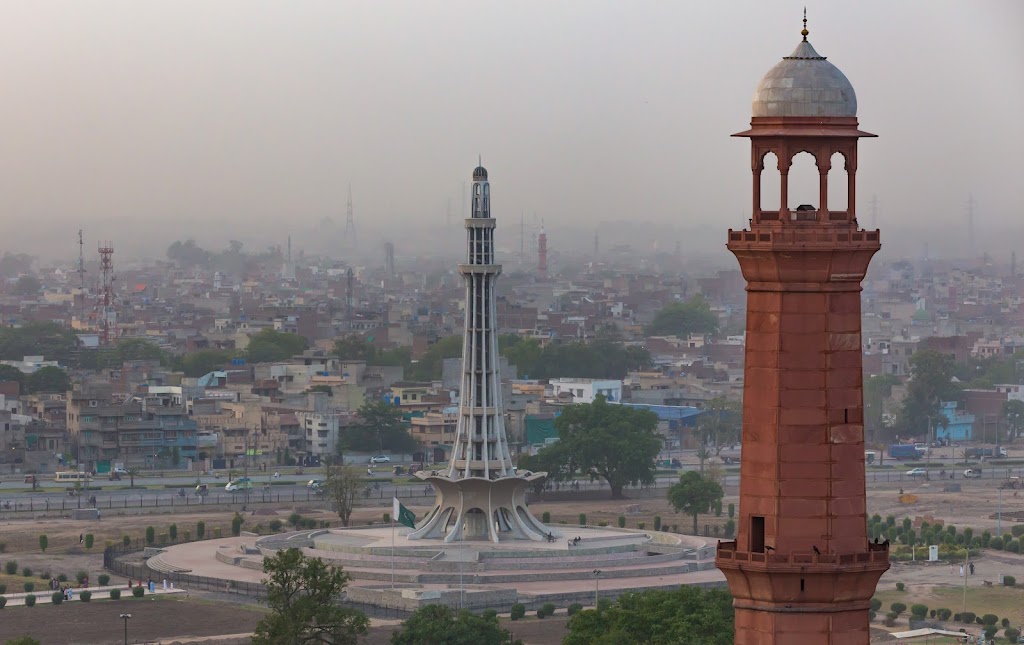
From Walk 22 to Walk 24, 1940, the All India Muslim Association held its yearly gathering at Minto Park, which is presently known as Iqbal Park in Lahore.
Muhammad Ali Jinnah explained how Hindus and Muslims couldn’t exist together, tranquilly in his discourse. He said that the differences between Muslims and Hindus were different so much that moulding a solitary government to direct both orders under one regulation could create certified issues. He further said that Muslims and Hindus have a spot with two unique human interests, as a result of conflicting considerations. Jinnah acknowledged that Hindus and Muslims have a spot with two interesting nations as the two social occasions had different occasions and various chronicles to get thoughts.
In his discourse, Jinnah depicted the contemporary situation between the Hindus and Muslims, which can later prompt a worldwide issue. He investigated the Congress and the patriot Muslims and embraced the Two-Country Hypothesis and the reasons behind the premium for various Muslim nations.
During ‘WWII,’ the ‘All-India Muslim Association’ started assembling support from South Asian Muslims, and their ‘two-country hypothesis’ began getting energy.
Insinuating the Lahore objective, the Leader of the Constituent Gathering, Dr Rajendra Prasad, communicated that neither Hindus nor Congress needed a segment. Be that as it may, Muhammad Ali Jinnah and the ‘Muslim Association’ were clear to their greatest advantage to make an alternate state for the Muslims.
Making an alternate state for the Muslims, over the long haul, transformed into a basic piece of the All-India Muslim Association’s political excursion in India.
After the segment of India in 1947, the ‘Lahore Goal’ was credited for playing a critical impact.